
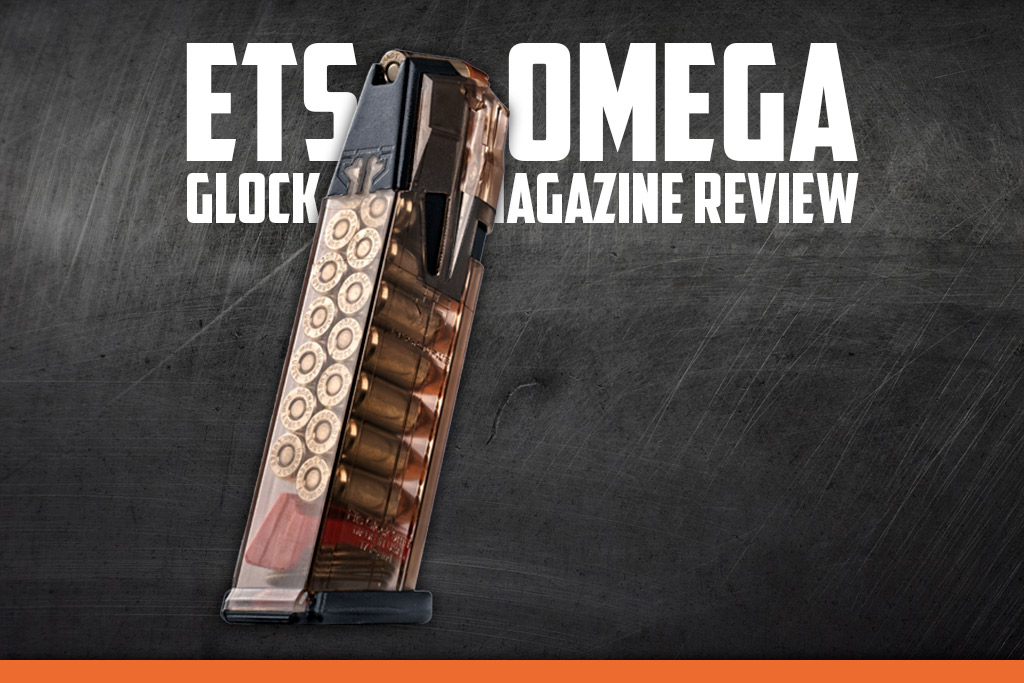
ETS Omega Magazine Review (For Glock)
Disclaimer: This page contains affiliate links, meaning we receive commissions for any purchases made through the links on this page.
Let’s look at the ETS Omega. Why do reliable magazines matter? Every serious shooter eventually learns the same lesson: the gun is only half the equation. A pistol can have a crisp trigger, a smooth slide, and match-grade sights, but if the magazine feeding it is unreliable, none of that matters. Magazines are mechanical devices with springs, followers, and feed lips that endure constant stress. The compression, release, impact, and exposure to dirt, moisture, and rough handling take their toll.
A single failure to feed, failure to lock back, or a cracked body at the wrong moment can turn a range day into a frustrating mess. Worse, it can become a genuine problem if you’re carrying the firearm for self-defense or duty use.
This is especially true for a pistol like the Glock 17, which so many people choose specifically because of its reputation for dead-simple reliability. Pairing a Glock with a mediocre aftermarket magazine undermines the very reason people buy the gun in the first place. So when ETS sent me a couple of their mags to try, I jumped at the opportunity to run them through the gauntlet. This included routine firing, reloads, and hazardous-duty use on a concrete floor and a gravel-floored range.
First Impression: ETS Omega
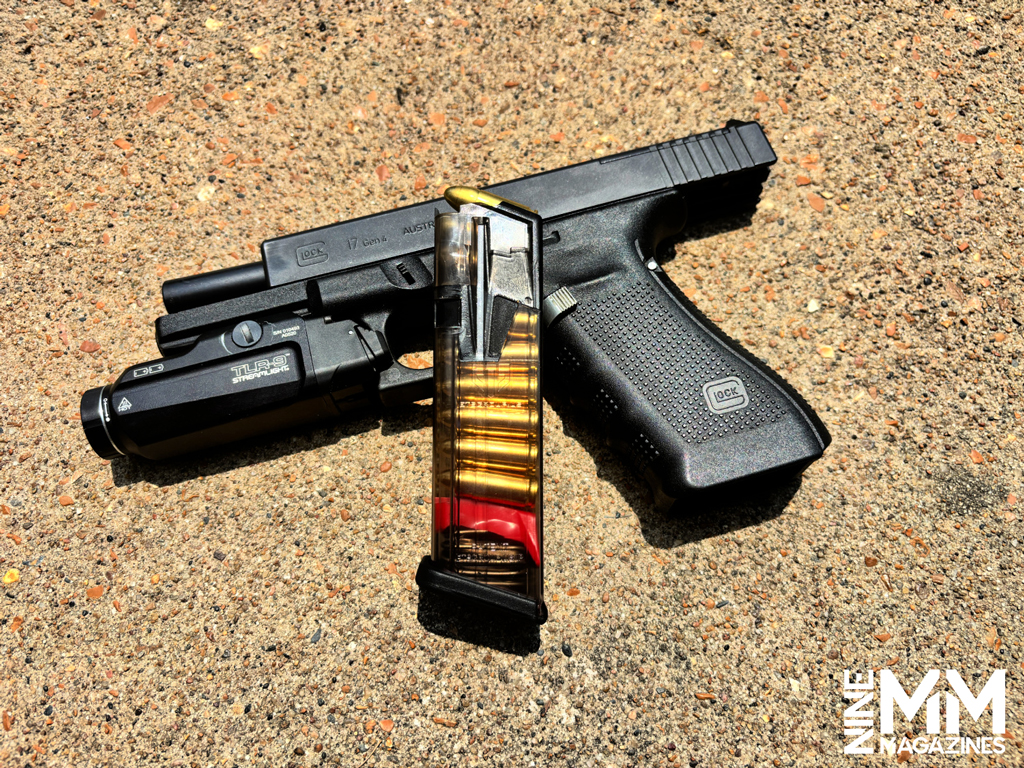
Right out of the package, the Omega magazine feels different from a lot of polymer aftermarket mags I’ve handled. ETS is known primarily for its clear polymer magazines. While the Omega line moves away from the totally-polymer body we’re all used to (more on that later), the build quality carries over. The magazine drops into the Glock 17’s mag well with no fuss. The fit against the frame is snug but not sticky, and it seats with a satisfying, positive click every time.
Fit & Finish
The finish is smooth and free of the rough mold lines or flashing you sometimes find on budget magazines. The floorplate is well fitted and doesn’t rattle or shift when you shake the magazine, even after dropping it several times, both loaded and unloaded. This small thing says a lot about the tolerances ETS is holding during manufacturing. They’re tight.
The follower runs smoothly along the internal walls, and the spring tension feels consistent from an empty magazine all the way up to a full 17-round load, with no binding, no rough spots, and no sense that the last few rounds are going to fight you on the way in. I did use my Uplula loader at first, but I didn’t need to after the first couple of restuffs.
Transparency: More Than a Gimmick
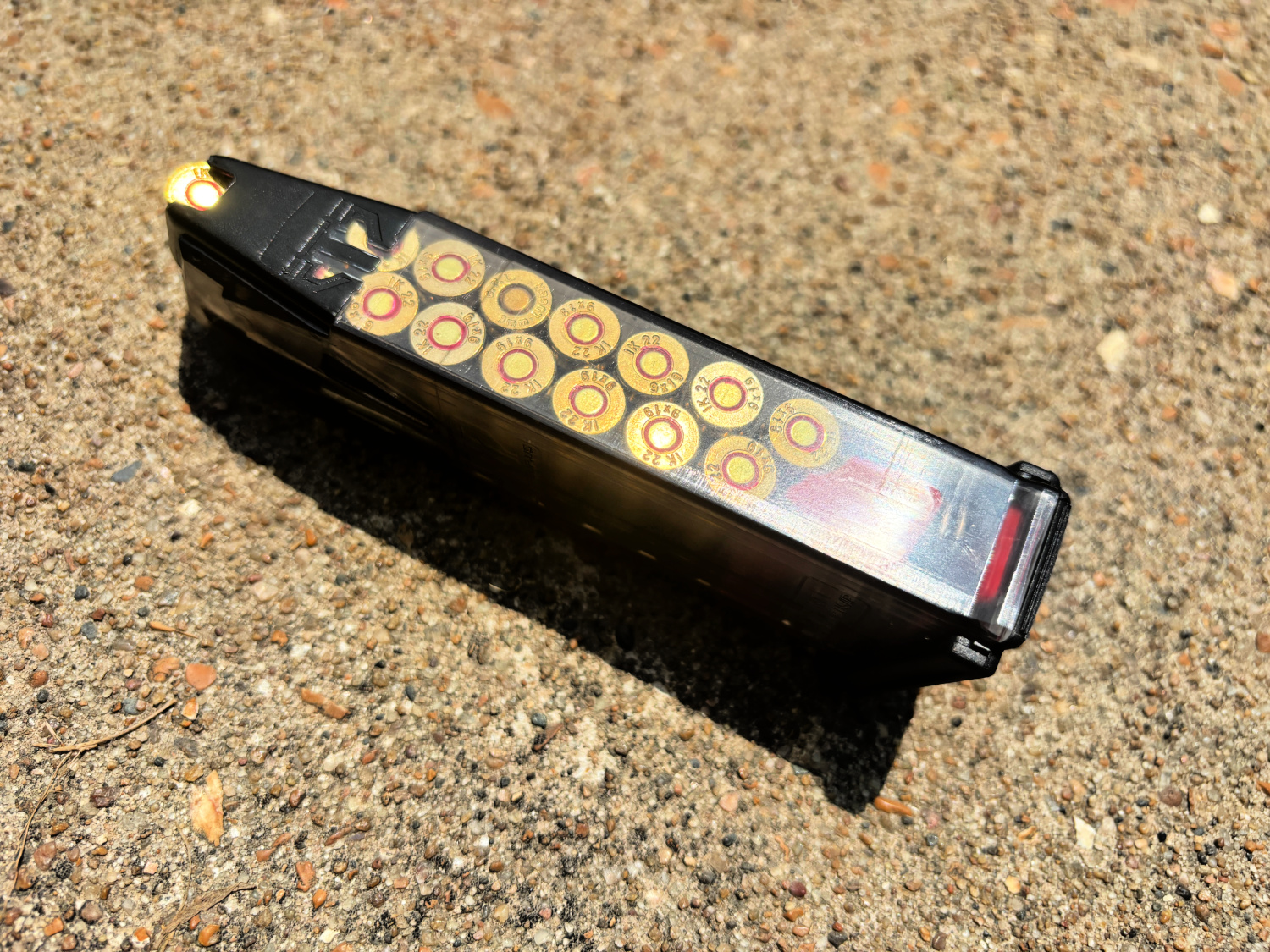
One of ETS’s signature features across its magazine lineup is a transparent polymer body, and even on models where the coloring is more opaque, you can still see enough to get a general sense of round count without needing to strip the magazine or count by feel.
This isn’t just a novelty. Being able to glance at a magazine and get a read on remaining capacity is a genuinely useful feature, whether you’re topping off mags before a range session, doing an admin check before heading out the door, or just keeping track of what’s loaded in your range bag. It’s a small quality-of-life improvement, but it’s the kind of thoughtful design detail that shows ETS is thinking about how these magazines are actually used, not just how they look on a shelf.
ETS Omega: Durability Where It Counts
Talk is cheap when it comes to durability claims, so I put the Omega through what I’d consider a fairly aggressive real-world test. Over the course of several range sessions, I ran more than 300 rounds of standard ball ammunition through a pair of these magazines in my Glock 17 without a single malfunction—no failures to feed, no failures to lock back on an empty magazine, no double feeds, nothing.
The magazine performed exactly like a factory Glock magazine should, which is to say it simply disappeared into the background of the shooting experience. That’s the highest compliment you can pay a magazine: it did its job so consistently that I stopped thinking about it entirely.
Beyond round count, I wanted to see how the ETS Omega would hold up to the kind of abuse magazines realistically encounter in the field or on a range floor. I dropped loaded and unloaded magazines onto concrete more times than I can count, and I also let them fall onto loose gravel, which tends to be even less forgiving because of the uneven, sharp-edged impact points.
In every case, the ETS Omega came away unscathed. No cracks at the feed lips, no stress fractures along the body, no damage to the floorplate or baseplate retention. The polymer ETS uses clearly has enough flex and impact resistance to absorb these hits without transferring that energy into a structural failure. For anyone who trains regularly and inevitably ends up dropping a mag or two during reloads, this kind of durability isn’t a luxury—it’s a baseline requirement.
Why Steel Feeder Lips on the ETS Omega?
You might be wondering why I didn’t bring this up earlier, but it’s fair to ask now: what’s with the steel feeder lips? After all, ETS prides itself on a lifetime of durable performance with only polymer, even at the critical mouth of the magazine, a part that has to withstand copious amounts of stress from holding rounds under tension to repeated reloads. Why change the design if it’s so great?
Apparently, the fine folks at EST don’t want to address the elephant in the room, as indicated by a complete lack of explanation on their website. ETS does pride itself on total polymer performance, backed by a lifetime guarantee, so please don’t misunderstand my pointing this out as a complaint. It’s not.
I’ve used a variety of ETS’s other magazines, both pistol and AR, for years now and have never run into an issue, so adding a steel framework at the mouth seems like an extra value-add and another way to ensure the magazine doesn’t fail. However, it would be nice for them to explain the change, if for no other reason than to calm critics who might claim that this “proves the original design isn’t any good.” What is ETS solving for? Inquiring minds want to know.
Backed by a Genuine Guarantee
Perhaps the most reassuring part of owning ETS magazines is the company’s lifetime unconditional guarantee. This isn’t a limited warranty full of exclusions and fine print. It’s a straightforward promise that if the magazine fails, ETS will make it right no matter what.
In an industry where some manufacturers hide behind vague warranty language, ETS’s willingness to stand behind their product unconditionally says a lot about their confidence in what they’re building. It also means that even if my particular magazines eventually show wear after years of use, I’m not stuck absorbing that cost myself.
ETS Omega: Good Buy?
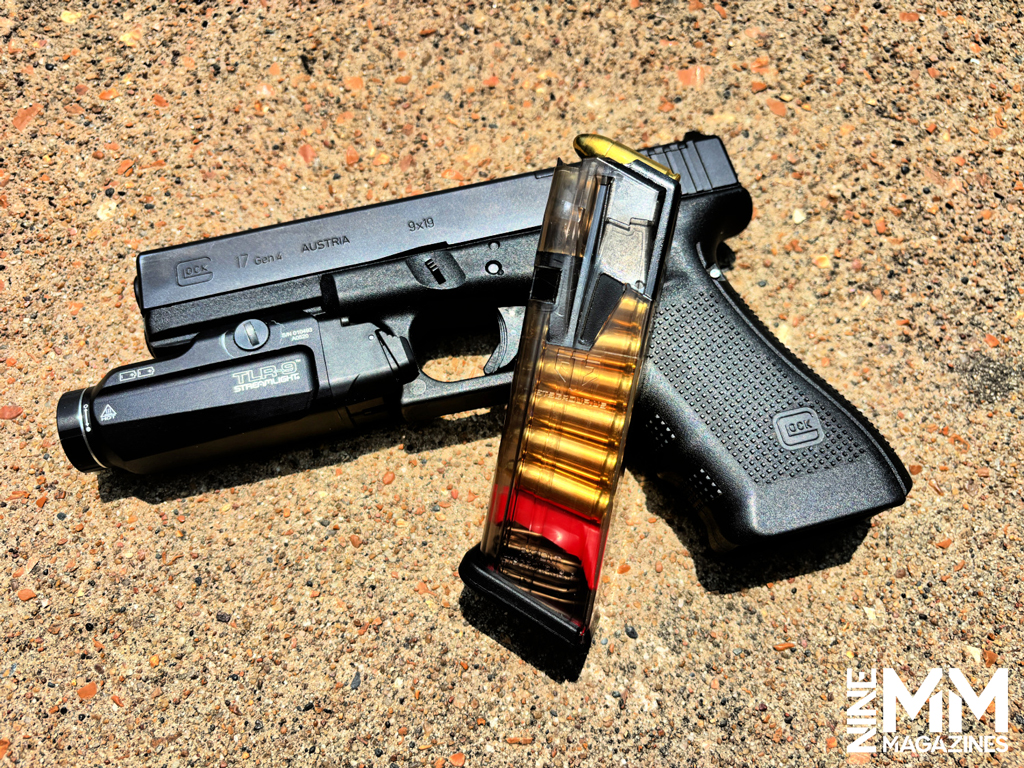
The ETS Omega magazine for the Glock 17 does exactly what a magazine should do: it disappears into the background and lets you focus on shooting. The fit and finish are excellent, the ability to visually check round count is a genuinely useful feature, and the durability held up to everything I threw at it, including my concrete and gravel drop tests.
Combined with over 300 rounds of flawless function and a lifetime unconditional guarantee backing it all up, the Omega has earned a permanent spot in my range bag. If you’re looking for an aftermarket Glock 17 magazine that doesn’t ask you to compromise on reliability, this is one of the easiest recommendations I can make.
My overall rating of the ETS Omega magazine for the Glock 17: 4.5/5 
David Workman is an author, avid gun guy, and contributing writer to several major gun publications.

- This loader works with Glock 19, 43, 26, 27, 17, 22, 23, and other Glock magazines in 9mm and .40SW. It is also compatible with Springfield Armory XD and XD(M) series magazines in 9mm and .40SW. It should also work for many other 9mm and .40SW magazines if they are not on the list below.
- This loader does not work with SIG 365, Springfield Hellcat, Taurus G2C/G3C, Beretta APX, Canik TP9, Makarov 9x18, Para Ordnance Tac-5. RemingtonRP9, SCCY, SIG 2022, STI 2011 9mm, Taurus PT111, 1911 9MM, High Point 995TS, P938, Taurus PT709, Walther CCP
- Works with virtual all types, material and brands of magazines, including double and single stack mags.
Looking for more Glock magazine reviews? Check out our Glock 17 magazine test.