

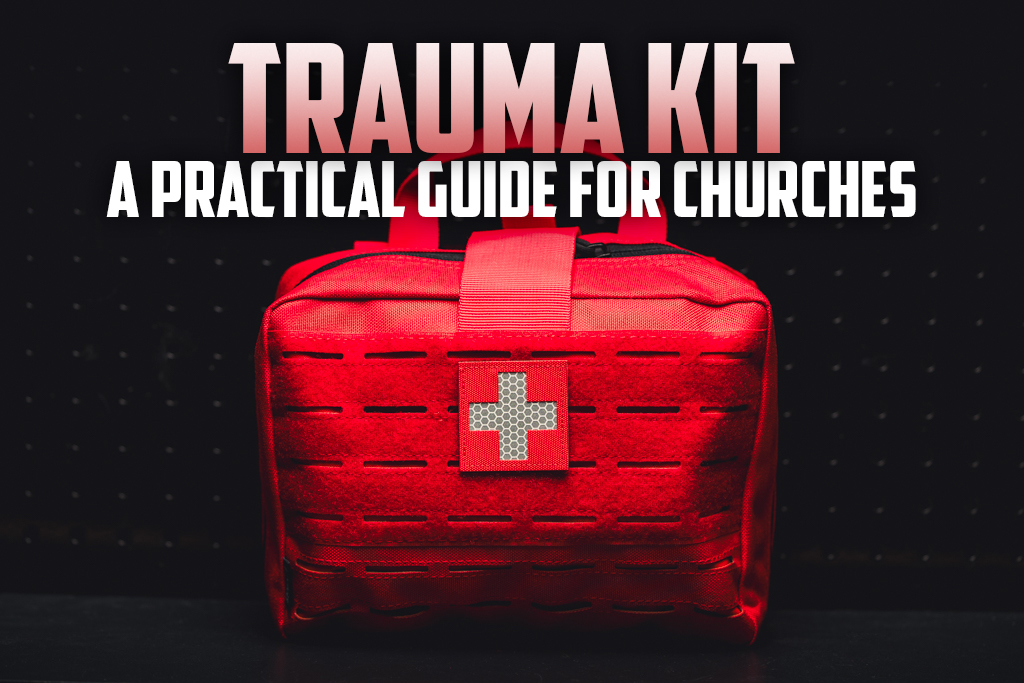
Church Trauma Kit
Disclaimer: This page contains affiliate links, meaning we receive commissions for any purchases made through the links on this page.
Having a church trauma kit is absolutely essential for any congregation. A trauma kit should be part of every action plan when preparing to respond to a wide range of threats: church shootings, targeted violence, and natural disasters.
While a church trauma kit is lifesaving in disaster situations, it’s also an important item for those common, everyday injuries. A child might hit his head on the playground, someone punctures their hand in the kitchen, or someone else trips down the stairs. Regardless of the incident, having a robust trauma kit at your church is a must.
Why Churches Need Trauma Kits
Churches need trauma kits because they are places where large numbers of people gather regularly, often including children, elderly individuals, and families. These sizable gatherings make them just as susceptible to medical emergencies as any public space. From everyday incidents like falls, cuts, or medical events to more serious situations such as accidents or acts of violence, the ability to respond quickly can mean the difference between life and death.
A properly equipped trauma kit, combined with trained volunteers, allows a church to provide immediate, life-saving care in the critical moments before emergency services arrive. Ultimately, having a trauma kit is not about fear. It’s about stewardship, responsibility, and being prepared to care for others when it matters most.
Church Trauma Kit VS Standard First-Aid Kit?
If you thought that buying a $10 first-aid Kit from Walmart meant you were prepared for most emergencies, don’t feel bad. This is a common misconception. Unfortunately, it’s also a deadly misconception, because those premade first-aid kits you buy from pharmacies and big-box stores rarely contain the lifesaving tools you need in a traumatic emergency.
Most of the time, these cheap premade first-aid kits contain 90% band-aids, which are useful but not lifesaving. The other 10% is usually random items like plastic tweezers, sting gel, and a few ibuprofen tabs. Again, somewhat useful but not lifesaving. Personally, I’ve never seen one of these kits stocked with a tourniquet, a chest seal, a pack of robust bleeding-control gauze, or any airway adjuncts.
That’s why it’s so important to take the time to build a real trauma kit for your church. You need the tools required to save lives.
Tip: You should store a trauma kit at your church and any associated campuses. Any place that hosts regular gatherings should have easy access to a trauma kit. Also, designate someone to bring the trauma kit any time the church gathers off-site. This could include a campground, a mission trip, or just a cookout at someone’s house.
How To Use A Church Trauma Kit
Training is the key to effectively deploying a trauma kit during an incident. We encourage you to seek out training specific to bleeding control and trauma care. You can find training locally by contacting your fire department or by reaching out to organizations online. The American Red Cross offers CPR certification in many states. STOP THE BLEED is an organization dedicated to training more people to perform good trauma care. You can find many resources on their website, StopTheBleed.org.
Here are a few other principles behind using a church trauma kit:
- Make sure you have more than one or two people trained. Many churches have some kind of rapid response team. This is great; however, make sure that you have more than just a few people trained. If possible, consider hosting a large church event focused on bleeding control, CPR, and first aid.
- Make sure you have more than one trauma kit (and enough supplies). One trauma kit is a good start, but if you have a large congregation, you’ll need more than one. If you’re on a strict budget, prioritize having extra tourniquets and gauze.
- Never (ever) buy cheap trauma kit tools or knock-offs: We get it, you’re trying to save a buck. But avoid this when buying lifesaving gear. This is especially true for critical gear, like a tourniquet. If you buy a cheap knockoff, there’s a high chance it’ll fail when you need it the most.
Tip: Store a church trauma/bleeding control kit next to items like AEDs and evacuation maps so people become familiar with the location of emergency stations.
Church Trauma Kit Basics
While you don’t want to go cheap on tools, a church trauma kit doesn’t need to bust the bank. In this section, we’ll give you a checklist to build a solid church bleeding control kit for around $200. The idea here is to keep things simple and organized. If we were building out a full tactical trauma kit, we’d adhere to the MARCH framework. Which is generally recognized as follows:
- Massive hemorrhage
- Airway
- Respiration
- Circulation
- Hypothermia / Head injury
We’re going to give you the simplified trauma framework, and then break it down by its specific parts.
In general, a church trauma kit should have three main components:
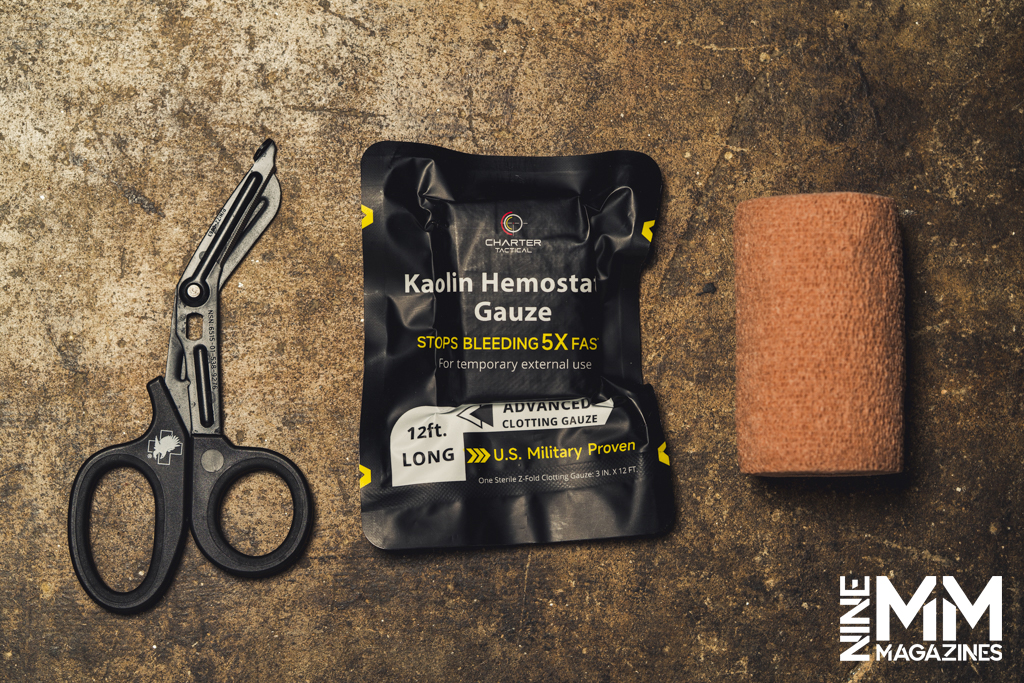
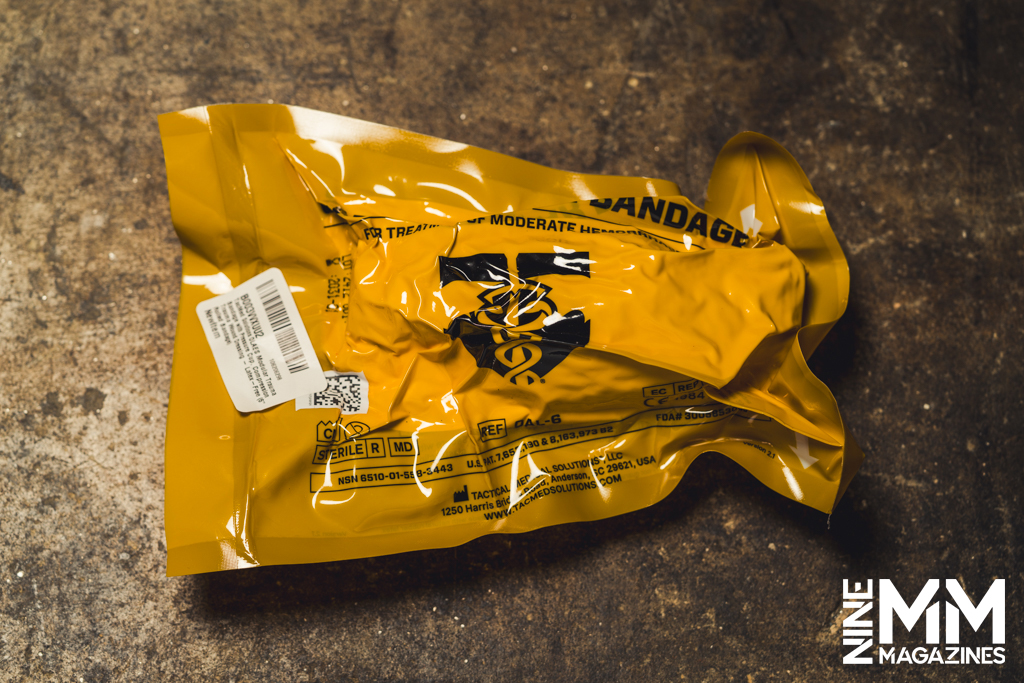
- Massive hemorrhage (bleeding) control. This section includes multiple tourniquets, gauze, and bandages.
- Airway and breathing support. Things like airway adjuncts, chest seals, and rescue breathing masks.
- PPE (personal protective equipment) and accessories. These include items such as gloves, trauma shears, permanent markers, and the bag to carry everything.
Church Trauma Kit Guide:
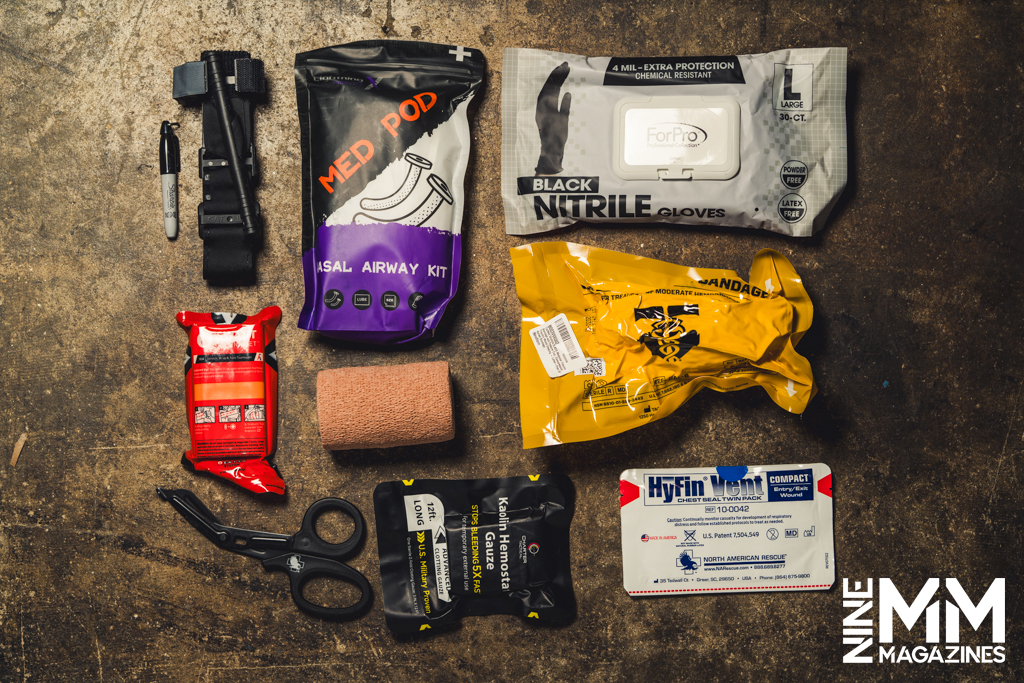
A well-prepared church trauma kit should include essential items that allow volunteers to respond quickly to individuals experiencing crisis-related distress. Church volunteers should be trained on these items and be able to use them in an emergency situation. Altogether, these items help to create a controlled environment where individuals can begin to stabilize victims and administer appropriate care.
Bleeding Control Items
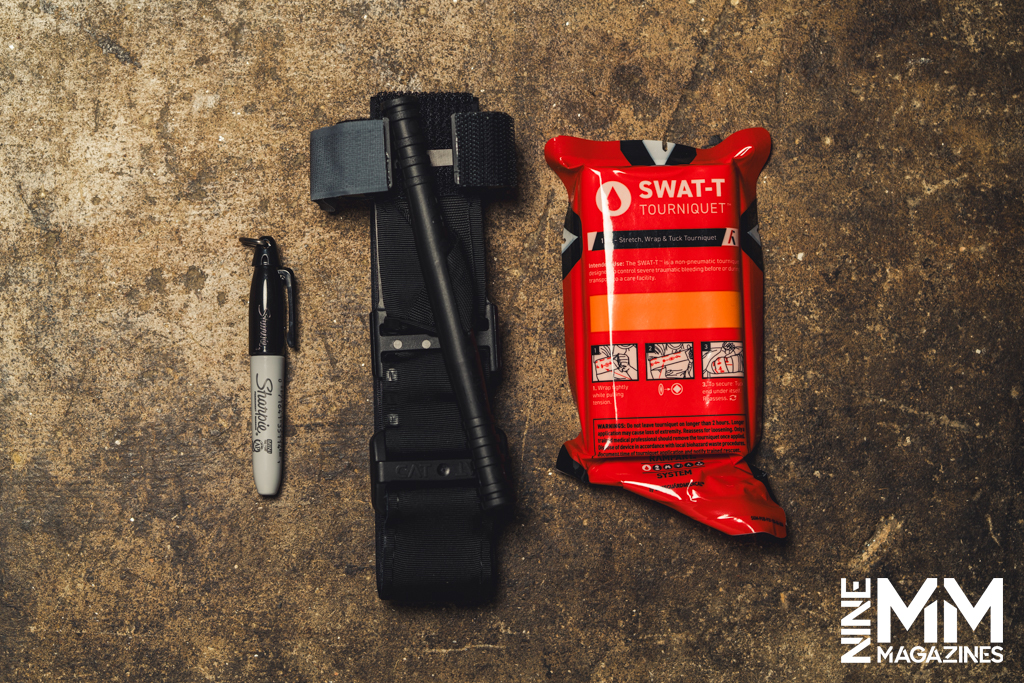
The most important aspect of a trauma kit is its bleeding-control elements. Uncontrolled bleeding is one of the leading causes of preventable death—if we train and equip more people, we can save more lives!
The staple of bleeding control is a good tourniquet. For older kids and adults, we suggest the CAT tourniquet. The CAT costs about $35 and is used by many elite military units worldwide. For smaller children, the SWAT-T is a great choice. Here’s a good video that explains how to use a CAT tourniquet. Don’t forget to keep a Sharpie on hand to mark the time the tourniquet was applied!
Of course, tourniquets can only be used on the arms and legs. For bleeds to the head, neck, groin, and armpits, you need some good hemostatic gauze for extra firm direct pressure and wound packing. Here’s a video that explains the principles of wound packing.
Finally, you need bandages to hold the gauze in place, apply pressure to slow bleeding, and keep clots in place. A modular bandage is great because it can wrap wounds and sprained ankles, and also act as a sling for broken arms. Think of these bandages as the Swiss Army knife of your trauma kit.
Airway Tools For Your Church Trauma Kit
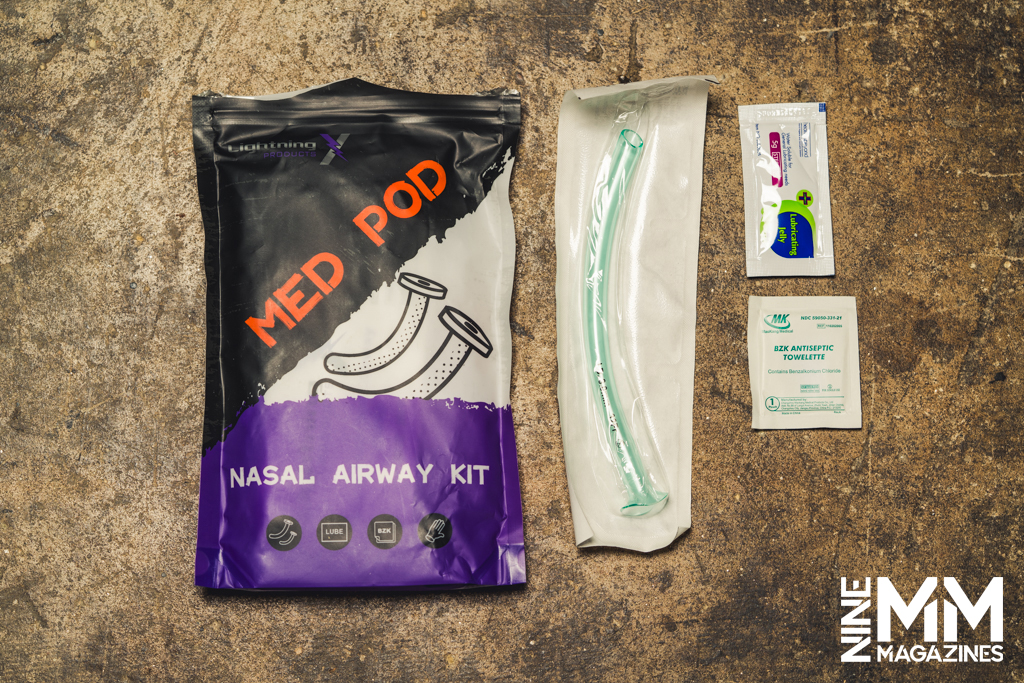
Next, we have the airway. No shocker here, people must breathe to stay alive. For airway management, you have two main jobs: Keep the airway clear of the tongue, blood, vomit, and saliva, and keep the lungs moving air in and out. To accomplish these tasks, you should have three tools on hand.
Nasopharyngeal Airway (NPA)
A nasopharyngeal airway (NPA) is a rubber tube inserted into the nose. When used properly, the NPA helps air move freely past the tongue and into the lungs. You need proper training before deploying the NPA. Here’s a video on how to use an NPA.
Breathing Barrier
The second tool is technically optional, but it’s nice to have. This is a barrier mask for rescue breathing. You can either buy a full pocket mask that covers the mouth and nose, or you can buy a simple plastic barrier that you lay on the person’s face to protect you from bodily fluids.
You can certainly provide direct mouth-to-mouth breaths, but if you’re trying to help a non-family member who has blood or vomit on their face, a barrier device is good to have. Here’s a video that explains the basics of rescue breathing.
Chest Seal
The final tool is a chest seal. For someone to breathe properly, their chest needs to be sealed. When something like a gunshot or stab wound creates a hole in the chest, it’s very difficult for people to take a good breath.
Think about it: as your chest expands now, you pull air into your mouth. But when you have a large hole in your chest, air won’t prefer to enter your mouth anymore—instead, it tries to enter through the hole in your chest. This is known as a sucking chest wound, and it’s deadly.
The chest seal is placed over any kind of penetrating wound/hole to the chest (front or back) and abdomen. This ensures that, when a wounded person takes a breath, the air actually enters their lungs. Here’s a video on applying a chest seal.
Other Essential Church Trauma Kit Accessories
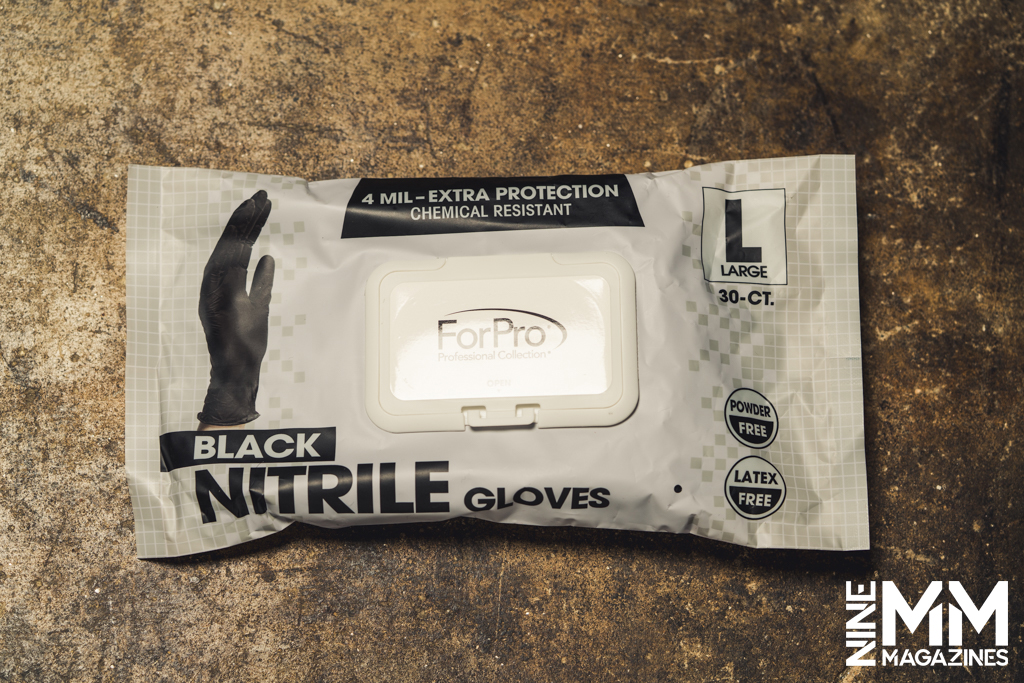
Alright, we’ve covered the two major categories of trauma care: bleeding and breathing. But there are a few other accessories you should have on hand to ensure proper care.
Nitrile Gloves
Avoid latex, as many people have allergies to it. Gloves will protect you from blood and bodily fluids. Keep in mind that if someone is injured right in front of you, especially if it’s yourself or a family member, you can apply direct pressure without gloves, as your intact skin provides a pretty good barrier.
Also, understand that with some bleeding wounds (such as to the carotid artery in the neck or femoral artery in the leg), you might not have time to put on gloves before someone bleeds out. Of course, use gloves whenever possible, just understand the urgent need for immediate extra-firm direct pressure on an open bleed.
Trauma Shears
These are a type of safety scissors that allow you to quickly cut away clothing from a wound. These can also be used to cut bandages to size, or as a windlass for an improvised tourniquet in a pinch.
Trauma Bag
You need a place to store your trauma tools. Ideally, this is a brightly colored pouch clearly marked “Trauma Kit: Bleeding Control.” Having a durable bag with Molle compatibility allows you to easily modify the kit for your church’s specific needs.
Tip: Store your CAT tourniquets with the wrappers removed. When seconds count, you don’t want to waste extra time peeling off the plastic covering.
Building The Right Church Trauma Kit
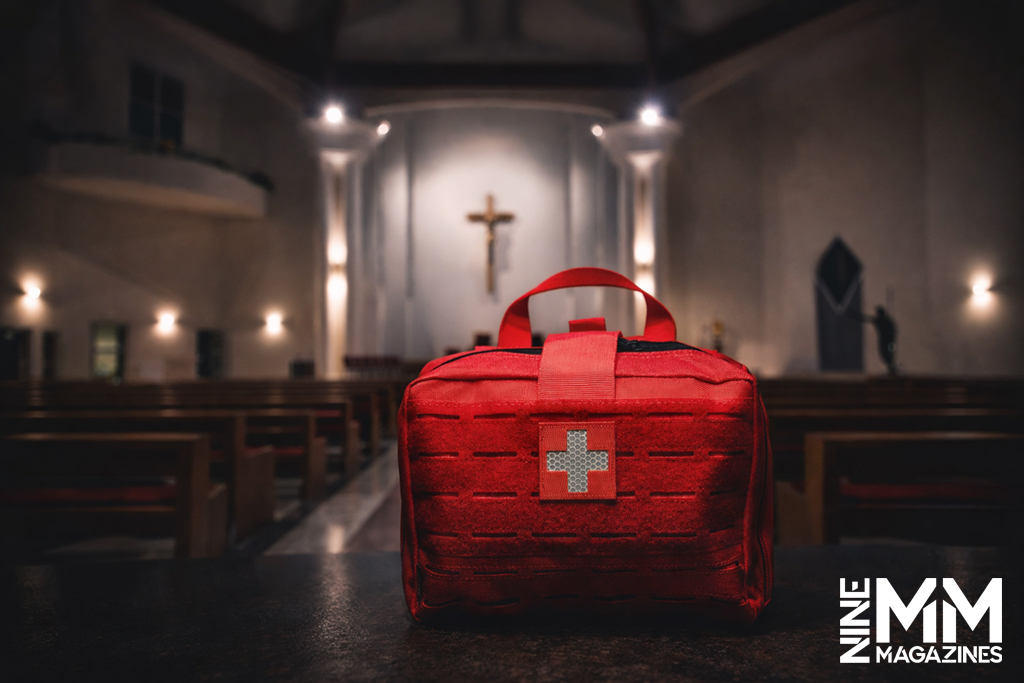
A church trauma kit is as essential as a church bathroom or a drinking fountain. Threats of church shootings, bombings, and even car-rammings have become (sadly) commonplace in the news. It’s critical to remain prepared for these events. Still, you don’t want to overlook the everyday emergencies that follow any gathering (the inevitable falls, cuts, and concussions that go with normal activities).
Coordination and functional training are key. Your volunteers must understand their role in an emergency situation and have the skills to follow through. Communication in high-stress situations can break down quickly, so it’s important to have a plan and a team in place when things go wrong. Arrangements between door greeters, security team members, and children’s ministry staff must be made in advance for the emergency plan to be successful.
Preparing and training with a good church trauma kit will give you peace of mind and the knowledge that, if the unthinkable happens, you’re ready to act.
Looking for a deep dive into the benefits of Kaolin Hemostatic Gauze? Check out our review at this link.
Guest writer Gideon Zielinski is a nationally registered paramedic.