


What Is A Rifle Magazine?
Disclaimer: This page contains affiliate links, meaning we receive commissions for any purchases made through the links on this page.
The modern rifle magazine allows soldiers, hunters, and sportsmen to achieve maximum efficiency with minimum failure. In this guide, you’ll learn where rifle magazines came from, what they can do, and how they differ.
Rifle magazines originated several hundred years ago, and some argue that their designs trace back to ancient times. Today, rifle magazines have evolved to feature many materials and designs. They include steel, polymer, and aluminum as materials and designs include box, tube, and drum magazines.
Overview: Rifle Magazine (Rifle “Mag”)
Here’s a little history on rifle magazines and mags in general. One of the earliest examples of a magazine-like system was an ancient design known as a polybolos, built to automatically fire arrows loaded into a feeder. The name polybolos means “many throwers.”
The DNA of the modern rifle magazine appeared around the 18th century, when the first tube magazines debuted. While some earlier designs existed, the fire that lit the magazine wick was probably the famous Winchester rifles, including the iconic Winchester 1873.
Rifle magazine topics we’ll cover:
- Most popular rifle magazine materials
- Most common rifle magazine designs
- The difference between various rifle’s design and their magazines
You’ll find all the good details below. Ready, aim, fire!
Most Popular Rifle Magazine Materials
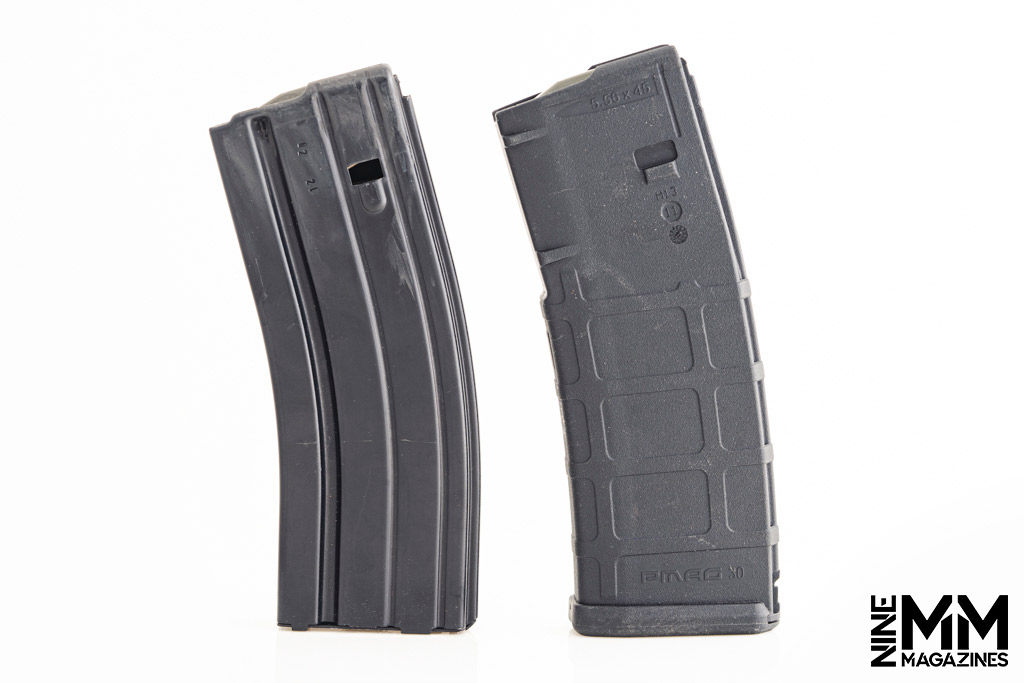
Like luxury watches and Lamborghinis, a rifle is a precise instrument. Every aspect of the magazine’s design can impact its form, fit, and function. In this section, we’ll talk about the materials that make up the most common rifle magazines.
Most common rifle magazine materials:
- Polymer rifle magazines: Polymer magazines have become more popular for several reasons. They’re light, durable, and relatively inexpensive to manufacture. Polymer magazines don’t rust, and many can be opened and maintained with the push of a button. Also, in cold environments, polymer can be easier to handle.
- Aluminum rifle magazines: Aluminum magazines are a middle ground between polymer and steel. Aluminum rifle magazines with a strong design are very durable, avoid corrosion, are relatively light, and appeal to those who prefer all-metal firearms.
- Steel rifle magazines: Steel magazines can be more expensive and slightly heavier; however, when properly built, some feel they offer superior reliability (this is hotly debated) and represent a good long-term investment.
Okay, we’ve got the materials down. Now, let’s chat about the various designs.
Common Types Of Rifle Magazines
Why do magazines come in so many different shapes and sizes? It all comes down to the different needs of gun owners. For example, a soldier, hunter, competition shooter, and home defender each have different needs.
But it doesn’t stop there. We also have to consider the categories within the categories. When it comes to soldiers, a sniper will need a different type of mag than a military policeman. As for hunting, the deer hunter requires something different from the duck hunter. So it goes with each category, which is why rifle magazines have so many designs.
Here are some of the most common types of rifle magazines:
- Box Magazines
- Tube Magazines
- Drum Magazines for Rifles
- Banana Magazines
- Clips vs. Magazines in Rifles
Below, we unload the details on each design.
Box Magazines For Rifles
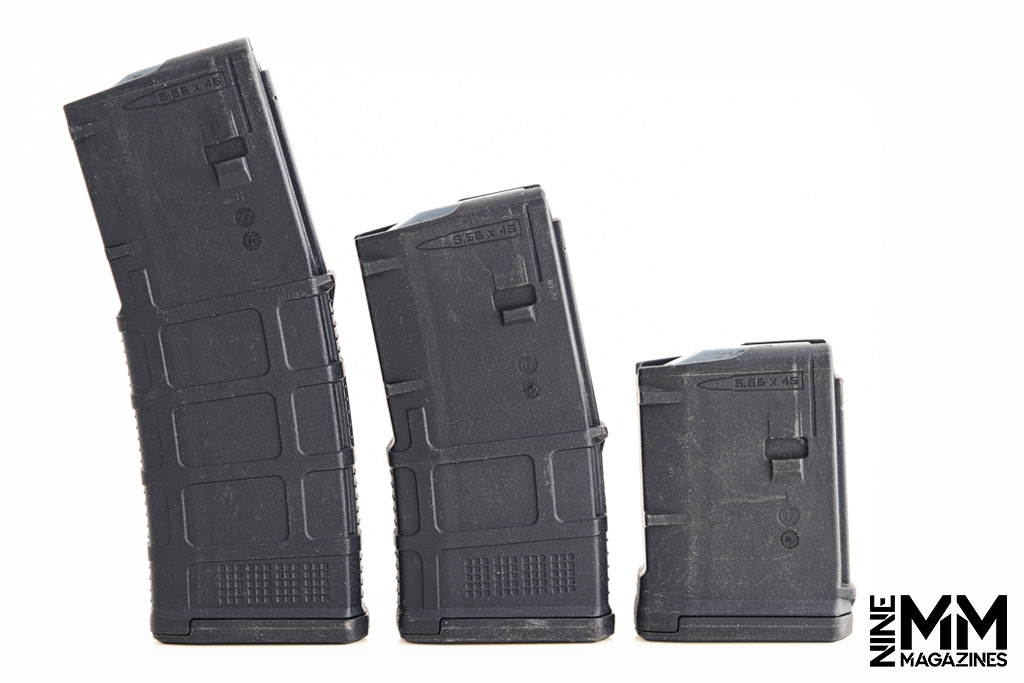
The box magazine is probably the most common. These rifle magazines are easy to spot because (surprise) they look like a box. Usually, box magazines have a standard capacity and are designed so that gun owners can conveniently carry extra magazines on their person. You’ll most often see them in 30, 20, and 10-round capacity varieties.
Some extended box magazines offer much more capacity but can also get pretty long, presenting maneuverability issues (we’ll discuss this more under drum mags).
Tube Magazines In Rifles
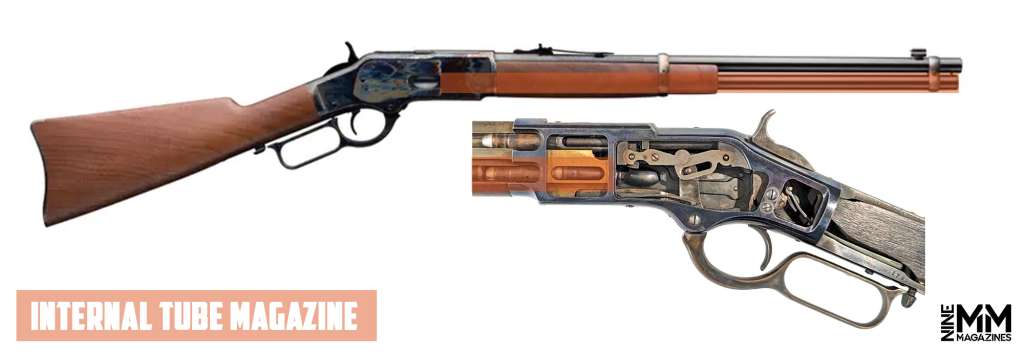
Another popular rifle mag is the tube magazine. The name explains what this magazine is: a tube. Tube magazines are some of the earliest mags to become popular and remain so to this day. These mags usually extend underneath the barrel of the firearm.
You’ll most likely see the tube magazine on lever-actions, and some bolt-actions. Some semi-auto shotguns also use the tube magazine design.
The tube magazine is almost always attached to the rifle, so you can’t easily carry extra like you can with a box magazine. Depending on your caliber, you’re limited to around 10 rounds. Still, tube magazines are reliable––and you don’t have to worry about losing them!
While extenders are available, tube mags aren’t typically the first option for high-capacity missions.
Drum Magazines For Rifles
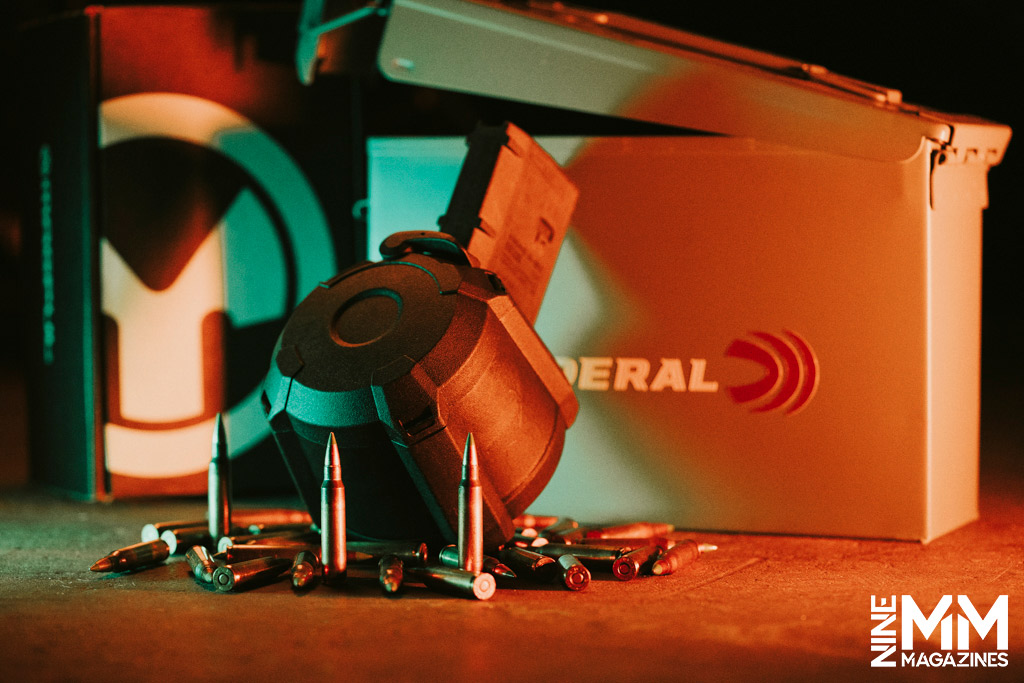
Unlike tube magazines, drum magazines are designed specifically for high-capacity needs. Once again, the drum magazine is precisely what it sounds like: a magazine shaped like a drum. Unlike a box magazine, where the rounds stack vertically, the rounds curve into a full circle with the drum magazine. Why?
Earlier, we said that extended box magazines can be cumbersome, and the drum magazine solves some of those issues. With a super extended box magazine, it can be difficult to fire while lying on your stomach (prone); however, with the drum magazine, you’re much less limited in movement and don’t make any sacrifice in capacity.
While drum magazines can be fun to use at the range, they are slightly more complex and, therefore, more expensive.
Clips vs. Magazines in Rifles
Clips, such as those found in the infamous M1 Garand Rifle, are different from traditional magazines in that they are designed to make loading a magazine faster. If you’re new to this idea, this article on stripper clips will explain everything.
In general, magazines can hold higher capacities than clips alone, which is one of the reasons some people avoid clips altogether. However, clips can make reloading your rifle much easier, so we will most likely see clips hang around for a long time.
Difference Between Semi-Auto Mags, Bolt-Action, & Lever-Action Tube Mags
Semi-automatic rifles tend to use some form of removable box magazine or drum magazine. Bolt-action and lever-action firearms often use tube magazines that are not easily detachable. What’s the reason for the difference?
Broadly speaking, you’ll find that many self-defense firearms use more detachable magazines, as higher capacity is often required. However, many hunting-related firearms have less demand for high-capacity, so a tube magazine or low-capacity box magazine works just fine. There’s a lot of use overlap, but that’s one way to think about the different designs.
Rifle Magazines & Their Many Forms

Some argue that rifle magazines originated in ancient weaponry; however, there’s no doubt that magazine designs have exploded in modern times and show no signs of slowing down.
When choosing the right rifle magazine, many people begin by considering the materials—polymer, aluminum, or steel. We’ve conducted various rifle magazine tests and compiled them for your convenience. Beyond that, matching rifle magazine capacity with your purpose is important. Larger magazines (such as drum mags and extended box magazines) tend to be used for self-defense, while tube mags are often used for hunting and competition.
Hopefully, you’ve learned something from this article. If you have, why stop now? Take a moment to keep learning by discovering the answer to this common firearm question: What is a handgun magazine?
Guest writer Gideon Zielinski is a nationally registered paramedic.